


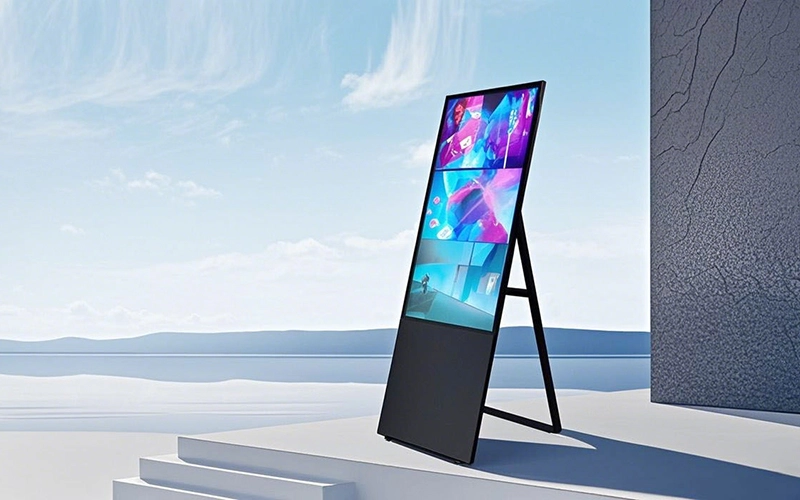
Responsables des achats, directeurs des opérations de vente au détail, et les gestionnaires d'installations d'entreprise sont souvent confrontés à un dilemme critique en matière d'achat.: “Les téléviseurs grand public standard ou les écrans à faible coût peuvent-ils remplacer l'affichage numérique commercial sur pied pour réduire les coûts matériels initiaux?”
Même si les écrans grand public semblent initialement rentables, leur ingénierie sous-jacente est fondamentalement incompatible avec les exigences commerciales. Les écrans commerciaux fonctionnent dans des conditions difficiles : autonomie quotidienne continue, trafic piétonnier ambiant élevé, risques d’impact physique, et environnements réseau complexes. Tenter de faire fonctionner des téléviseurs grand public dans des environnements commerciaux entraîne souvent une surchauffe des panneaux., rétention d'image (brûlure), dommages au verre, et une panne matérielle précoce au sein 12 mois.
Ce guide d'approvisionnement B2B évalue les différences techniques entre le matériel commercial et grand public., analyse le coût total de possession (Coût total de possession), et met en évidence les principaux critères de sélection pour affichage numérique sur pied commercial.
1. Répartition architecturale: Signalisation commerciale vs. Téléviseurs grand public
D'abord, l'affichage numérique commercial diffère des téléviseurs grand public en termes de durée de fonctionnement, spécifications du panneau, protection, conception thermique, et gestion du système.
Le tableau suivant résume les principales différences:
| Paramètre de fonctionnalité | Affichage numérique sur pied commercial | Télévision grand public / Afficher |
|---|---|---|
| Cycle de fonctionnement | 16/7 ou 24/7 fonctionnement continu | Généralement conçu pour 6 à 8 heures par jour |
| Spécification du panneau | Panneau LCD LG A+ de qualité commerciale | Panneau standard de qualité grand public |
| Protection des surfaces | 4 verre de sécurité trempé de mm | Protection standard en verre ou en plastique |
| Gestion thermique | Structure de dissipation thermique industrielle | Principalement conçu pour le flux d'air résidentiel |
| CMS & Télécommande | Gestion de contenu à distance basée sur le cloud | Contrôle local de base |
| Enceinte & Châssis | Boîtier métallique autoportant renforcé | Châssis en plastique grand public et support de table |
Comme le montre le tableau, la signalisation commerciale se concentre sur la fiabilité à long terme et la gestion centralisée. Téléviseurs grand public, cependant, donner la priorité au visionnement résidentiel et réduire les coûts initiaux.
24/7 Exploitation et gestion thermique
D'abord, le temps de fonctionnement est l'une des différences les plus importantes.
Les téléviseurs grand public prennent généralement en charge un visionnage domestique normal plutôt qu'un fonctionnement commercial continu. Lorsqu'il est utilisé pendant des périodes prolongées, la chaleur interne peut s'accumuler et accélérer le vieillissement des composants.
Au fil du temps, une chaleur excessive peut contribuer à la décoloration de l'affichage, Dégradation du rétroéclairage LED, ou panne d'alimentation prématurée.
Par comparaison, l'affichage numérique commercial au sol utilise des structures de gestion thermique dédiées. Ces conceptions aident l'écran à fonctionner de manière fiable sous 16/7 ou 24/7 cycles de service, selon la configuration choisie.
Donc, les entreprises doivent toujours faire correspondre l’horaire de fonctionnement nominal de l’écran avec les heures de travail réelles du lieu.
Qualité des panneaux commerciaux et cohérence visuelle
La qualité des panneaux joue également un rôle important dans les applications commerciales.
Utilisations de l'affichage numérique commercial HOSDA Panneaux LCD de qualité LG A+ avec jusqu'à 3840 × 2160 4Résolution K UHD.
Par conséquent, l'écran peut fournir des graphiques promotionnels détaillés, texte pointu, et des performances visuelles constantes.
Pour les installations multi-écrans, la cohérence des panneaux devient encore plus importante. Rétroéclairage uniforme, angles de vision larges, et une reproduction précise des couleurs peut aider à maintenir une image de marque cohérente sur plusieurs sites.
2. Caractéristiques de l'affichage numérique commercial au sol HOSDA
Pour répondre aux exigences des environnements commerciaux, HOSDA développe affichage numérique sur pied commercial pour les magasins de détail, hôtels, centres commerciaux, installations d'entreprise, et autres lieux publics.
Le système combine une technologie d'affichage haute résolution avec des fonctions tactiles interactives, systèmes d'exploitation flexibles, et gestion de contenu basée sur le cloud.
4Panneau K LG A+ avec 4 mm Verre trempé
D'abord, la signalisation utilise un panneau LCD de qualité LG A+ pour fournir des visuels 4K haute résolution.
Cette configuration est adaptée aux vidéos promotionnelles, images de produits, menus numériques, et autres contenus marketing haute définition.
Entre-temps, le 4 mm verre trempé offre une protection supplémentaire contre les impacts accidentels et les rayures.
Donc, l'écran est mieux adapté aux environnements publics très fréquentés où les équipements sont confrontés à des interactions fréquentes avec les clients.
Interaction tactile capacitive rapide
Pour les applications interactives, HOSDA intègre la technologie tactile capacitive avec un temps de réponse de moins que 8 MS.
Cette réponse rapide crée une expérience utilisateur fluide et réactive. Par conséquent, les entreprises peuvent utiliser le système pour:
- Catalogues de produits interactifs
- Kiosques d'information en libre-service
- Annuaires numériques
- Orientation du centre commercial
- Applications hôtelières en libre-service
- Campagnes promotionnelles interactives
Par conséquent, l'écran peut fonctionner à la fois comme une plateforme publicitaire et comme un terminal interactif de service client.
Systèmes d'exploitation Windows et Android flexibles
En outre, La flexibilité du système d'exploitation aide les entreprises à intégrer l'affichage numérique aux logiciels existants.
HOSDA fournit Options du système d'exploitation Windows et Android pour différentes applications commerciales.
Les configurations Android peuvent fournir une lecture multimédia efficace et un déploiement simple d'affichage numérique. Entre-temps, Les configurations Windows conviennent aux applications interactives plus complexes, bases de données, et logiciels d'entreprise.
En outre, la gestion à distance basée sur le cloud permet aux équipes marketing de gérer plusieurs écrans à partir d'une plateforme centralisée.
Les utilisateurs peuvent à distance:
- Télécharger du contenu publicitaire
- Programmer des listes de lecture multimédia
- Mettre à jour les campagnes promotionnelles
- Gérer plusieurs emplacements
- Surveiller l'état de l'appareil
- Contrôler les dispositions en écran partagé
Cette approche simplifie considérablement la gestion de l'affichage numérique multi-sites.
Lecture intelligente sur écran partagé
En plus de la lecture plein écran standard, L'affichage numérique HOSDA prend en charge les dispositions intelligentes en écran partagé.
Les entreprises peuvent afficher plusieurs types de contenus simultanément, y compris:
- Vidéos promotionnelles
- Images de produits
- Texte défilant
- Publicités numériques
- Informations météorologiques
- Annonces
Donc, un écran peut servir à plusieurs fins de communication sans nécessiter d'écrans supplémentaires.
Connectivité d'entreprise et interfaces d'extension
Enfin, la connectivité est essentielle pour les déploiements d'affichage numérique commerciaux.
Les systèmes HOSDA peuvent prendre en charge des interfaces telles que:
Wi-Fi 6, Bluetooth, HDMI, Type-C, Ethernet RJ45, USB 3.0, et sorties audio.
Ces options de connectivité facilitent l'intégration de lecteurs multimédias externes, réseaux d'entreprise, périphériques interactifs, et autres équipements commerciaux.
3. Coût total de possession: Pourquoi le matériel moins coûteux peut coûter plus cher
À première vue, les téléviseurs grand public peuvent sembler plus économiques car leur prix d'achat est généralement inférieur.
Cependant, le prix d'achat initial ne représente pas le coût total d'un déploiement commercial.
Les entreprises devraient également tenir compte de la durée de vie, entretien, temps d'arrêt, gestion de contenu, et les frais de remplacement.
| Mesure financière | Affichage grand public dans une configuration de vente au détail | Affichage numérique commercial HOSDA |
|---|---|---|
| Prix d'achat initial | Coût initial réduit | Investissement initial plus élevé |
| Durée de vie prévue pour une utilisation prolongée | Risque de panne plus élevé en fonctionnement continu | 50,000+ heures de durée de vie réclamée |
| Entretien & Remplacement | Un remplacement plus fréquent peut augmenter les temps d'arrêt | Conception nécessitant peu d'entretien avec 4 verre de protection mm |
| Prise en charge de la garantie commerciale | Peut avoir des restrictions d'utilisation | Support de garantie commerciale B2B |
| Gestion de contenu | Mises à jour manuelles sur des écrans individuels | Gestion centralisée du CMS cloud |
| Opération multi-sites | Contrôle centralisé limité | Distribution de contenu à distance sur plusieurs sites |
Donc, les équipes d'approvisionnement devraient évaluer coût total de possession (Coût total de possession) plutôt que de se concentrer uniquement sur le prix initial du matériel.
Pour les entreprises utilisant plusieurs écrans, la gestion centralisée du CMS peut également réduire le temps requis pour les mises à jour de routine du contenu.
4. Liste de contrôle pour l'approvisionnement en affichage numérique commercial
Avant d'acheter affichage numérique au sol, les responsables des achats doivent évaluer plusieurs facteurs techniques.
Vérifiez les heures de fonctionnement requises
D'abord, confirmer le calendrier d'exploitation réel du lieu.
Par exemple, les magasins de détail peuvent exiger 16/7 opération, pendant que les lobbys de l'hôtel, centres de transport, et d'autres installations peuvent nécessiter des périodes d'exploitation plus longues.
Donc, sélectionner un présentoir commercial conçu pour le cycle de service requis.
Confirmer les spécifications du panneau et du verre
Suivant, vérifier la qualité du panneau et le verre de protection.
Pour les environnements à fort trafic, panneaux de qualité commerciale et 4 verre de sécurité trempé de mm peut fournir une durabilité et une cohérence visuelle supplémentaires.
Évaluer les fonctionnalités de Cloud CMS
En outre, confirmer si la plateforme d'affichage numérique prend en charge la gestion centralisée du contenu.
Les fonctions importantes incluent:
- Distribution de contenu cloud
- Lecture programmée
- Dispositions en écran partagé
- Surveillance des appareils à distance
- Gestion multi-sites
Ces fonctions deviennent de plus en plus précieuses à mesure que le nombre d'écrans augmente.
Vérifier la compatibilité du système d'exploitation
Enfin, sélectionner le système d'exploitation en fonction de l'application.
Androïde convient à la lecture multimédia économique et aux applications de signalisation standard. Entre-temps, Fenêtre peut être plus adapté aux logiciels interactifs avancés, intégration de base de données, et applications d'entreprise.
Résumé technique
Choisir affichage numérique sur pied commercial au lieu d'un téléviseur grand public, il peut offrir une meilleure fiabilité, protection, et capacités de gestion pour les environnements professionnels exigeants.
Les systèmes commerciaux sont conçus pour des cycles de fonctionnement plus longs et peuvent intégrer des fonctionnalités telles que Panneaux LG A+ 4K, 4 mm verre trempé, technologie tactile capacitive, et gestion de contenu basée sur le cloud.
De plus, les configurations flexibles d'Android et de Windows permettent aux entreprises de sélectionner le matériel en fonction de leurs exigences logicielles.
Pour la vente au détail, hospitalité, entreprise, et applications dans l'espace public, HOSDA fournit des affichage numérique commercial au sol, bornes tactiles interactives, et solutions d'affichage numérique pour les clients B2B mondiaux.
