


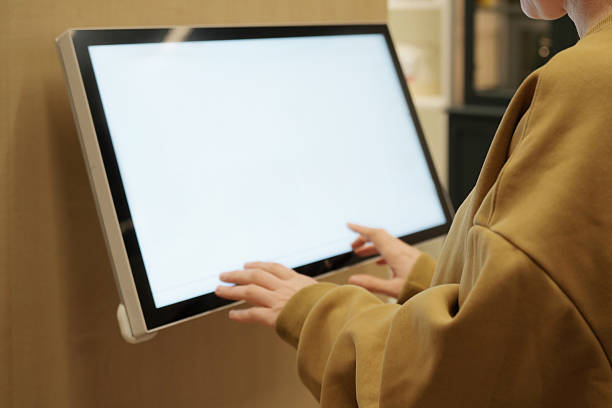
El papel de las pantallas ha pasado de pasivo a activo. Las modernas pantallas táctiles LCD ahora sirven como interfaces sensoriales. By integrating ambient light, proximity sensors, and fingerprint modules beneath the screen, they become more intuitive. These advancements turn displays into highly intelligent, multi-functional interfaces for a smarter user experience.
This integration is not just about aesthetics; it is about creating an “invisible” technology experience. Imagine a world where devices have no notches, bezels, or buttons. Here, the LCD module becomes the sensor, adapting to both environment and user. This article explores breakthroughs that enable these sensors to “see” through the LCD. By integrating this technology, we create more streamlined, secure, and intuitive devices.
1. The Invisible Eye: Under-Display Ambient Light and Proximity Sensing
Durante años, el “forehead” of a smartphone or tablet was cluttered with small windows for light and proximity sensors. In modern Soluciones de diseño de pantalla táctil LCD, these components are being moved under the screen, requiring a delicate balance between display quality and sensor transparency.
Natural Brightness with Under-Display ALS
The Under-Display Ambient Light Sensor must accurately measure the external environment’s lux levels while filtering out the “noise” of the screen’s own backlight.
-
The Technical Challenge: LCDs are non-emissive and rely on a backlight unit (BLU). The sensor must sit behind the liquid crystal layer and the colour filters, which naturally block a large portion of light.
-
The Solution: Advanced algorithms and specialised “pinhole” or high-transparency areas in the TFT (Thin Film Transistor) backplane allow enough photons to reach the sensor. This enables the device to adjust screen brightness and colour temperature more naturally, mimicking the way the human eye perceives light.
Seamless Call Management via Proximity Sensors
The proximity sensor is what tells your device to turn off the screen when it’s held to your ear. By integrating this under the LCD, engineers eliminate the need for a physical “top bezel.” Using infrared (IR) light that passes through the LCD gaps, the sensor detects reflected light from the user’s face. This ensures a clean, “all-screen” aesthetic without sacrificing the functional reliability of call-state screen management.
2. The Security Breakthrough: Optical Fingerprint Sensing on LCD
While OLED panels have enjoyed under-display fingerprint tech for years, bringing this to LCD was long considered the “Holy Grail” de Soluciones de diseño de pantalla táctil LCD due to the presence of the backlight.
Overcoming the Backlight Barrier
Optical fingerprint sensors work by capturing a high-resolution image of the ridges and valleys of a finger. On an LCD, the backlight typically blocks the sensor’s view.
-
Localised High-Brightness Backlighting: To make this work, the LCD module utilises a specialised backlight zone that can emit intense light in a specific area. This light reflects off the finger, passes back through the liquid crystal layers, and reaches an optical sensor tucked beneath the BLU.
-
Infrared Optical Paths: Some advanced designs use IR light for fingerprint scanning, which can pass through the LCD layers more easily than visible light, allowing for secure, biometric authentication without causing visual “bleeding” or bright spots for the user.
3. Minimalism as a Design Philosophy: The Aesthetic Impact
The transition to an integrated sensing nexus is the ultimate win for industrial designers. By moving the ALS, PS, and fingerprint sensors under the glass, the device achieves a “Bezel-less” or “Infinity” look that was previously impossible for LCD-based products.
-
Design Concise: No more cut-outs, “teardrop” notches, or side-mounted fingerprint power buttons. The device becomes a single, monolithic slab of glass and metal.
-
Uninterrupted Visuals: For users, this means a more immersive experience in gaming, media consumption, and professional workflows. The Perception Centre works silently in the background, making the technology feel more like magic and less like a machine.
4. El “Sensing Cortex”: Creating a Unified User Experience
When these sensors are integrated into a single LCD module, they don’t just work independently; they work as a unified system to anticipate user needs.
-
Smart Wake-Up: The proximity sensor detects an approaching hand, the ambient light sensor adjusts the panel to the perfect wake-up brightness, and the fingerprint area illuminates—all before the user even touches the glass.
-
Adaptive Interaction: If the environment is dark, the integrated module reduces blue light and increases fingerprint scanning sensitivity to ensure a “first-time” unlock success.
-
Space Efficiency: For manufacturers, an integrated module reduces the internal footprint, allowing for larger batteries or more powerful cooling systems within the device chassis.
5. Future Outlook: Beyond Biometrics and Light
The evolution of Soluciones de diseño de pantalla táctil LCD doesn’t stop at light and fingers. We are moving toward a future where the LCD module can sense even more:
-
Under-Display Cameras (UDC): Combining sensing and imaging to eliminate the “punch-hole” camera.
-
Pressure Sensing: Integrating haptic feedback and force-touch capabilities directly into the sensing nexus.
-
Health Monitoring: Using the optical fingerprint path to measure heart rate or blood oxygen (SpO2) levels through the fingertip.
6. Conclusión: The LCD as a Perception Hub
Imagine a device that doesn’t just display, but understands you. The integrated LCD module now serves as the “nerve ending” of modern electronics. By combining light sensing, proximity detection, and biometric security, LCD designs are evolving. This shift enables cleaner design and more intuitive human-device interaction.
As displays become central to perception, the line between digital and physical blurs. Now, devices don’t just show the world—they understand our role in it.
