


تتطلب أنظمة الدفع الحديثة موثوقية استثنائية. تشكل تقنية شاشة اللمس واجهتها الأساسية. هوسدا examines two dominant solutions. Capacitive and infrared technologies offer distinct advantages. This comprehensive analysis explores their practical implementation. Payment kiosk manufacturers will find crucial insights here.
Understanding the Technologies
Capacitive touchscreens detect finger contact through electrical charge changes. They use transparent conductive layers. These layers sense a user’s touch location. The technology provides excellent image clarity. It maintains high light transmission. Manufacturers favor its durability.
Infrared technology employs light beams. It creates an invisible grid across the screen. Interrupted beams detect touch positions. This system works with any stylus. It doesn’t require conductive materials. Both technologies suit payment environments differently.
Image Quality and Optical Performance
Capacitive screens offer superior visual characteristics. They maintain 90% light transmission. This ensures vibrant color reproduction. Payment interfaces appear crisp and clear. Sunlight readability remains excellent. Customers appreciate the premium display quality.
Infrared systems face optical challenges. They suffer from potential glare issues. Ambient light can interfere with sensors. لكن, they preserve display integrity completely. No additional layers degrade image quality. This benefits high-resolution payment interfaces.
Durability and Damage Resistance
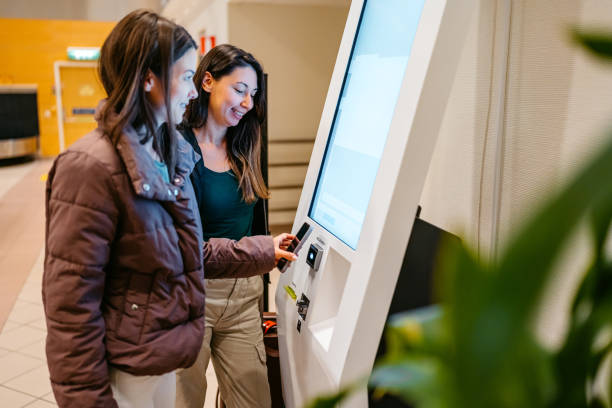
Payment kiosks endure constant public use. Capacitive screens feature hardened glass surfaces. They resist scratches effectively. Vandalism protection proves adequate. But impact damage can be costly. Complete replacement often becomes necessary.
Infrared technology excels in resilience. Its sensors mount outside the display. The actual screen requires no special coating. It withstands heavy impacts successfully. Broken glass doesn’t disable touch functionality. Maintenance costs remain lower, consequently.
Environmental Adaptation
Capacitive screens perform consistently indoors. They handle temperature variations well. Moisture resistance meets IP65 standards. لكن, water droplets cause false touches. This creates payment errors occasionally.
Infrared systems operate in harsh conditions. They function with water on screens. Gloved hands don’t affect performance. Dust accumulation requires regular cleaning. Extreme temperatures rarely cause failures. Outdoor installation becomes feasible, لذلك.
Cost Analysis and Implementation
يأخذ المصنعون في الاعتبار إجمالي تكاليف الملكية. تحمل التكنولوجيا السعوية تكلفة أولية أعلى. الإنتاج ينطوي على عمليات معقدة. لكن الأسعار انخفضت بشكل ملحوظ. الإنتاج الضخم يتيح الأسعار التنافسية الآن.
توفر حلول الأشعة تحت الحمراء مزايا الميزانية. تظل عملية التصنيع الخاصة بهم أبسط. تظل تكاليف الإصلاح منخفضة بشكل ملحوظ. يحدث استبدال المكونات بسرعة. تصبح المدخرات طويلة الأجل كبيرة. الشركات الصغيرة تفضل هذه القدرة على تحمل التكاليف.
متطلبات النظافة والصيانة
تؤثر مخاوف الصحة العامة على اختيار التكنولوجيا. تتميز الشاشات السعوية بأسطح سلسة. أنها تسمح بتطبيق مطهر سهل. يتم تقليل نمو البكتيريا بشكل فعال. تحافظ محطات الدفع على معايير النظافة.
تقوم إطارات الأشعة تحت الحمراء بجمع الأوساخ في الفجوات. يصبح التنظيف العميق المنتظم أمرًا ضروريًا. الصرف الصحي يتطلب اهتماما دقيقا. But mechanical wear stays minimal. Component longevity increases significantly. Maintenance schedules vary accordingly.
Touch Accuracy and Response Time
Payment kiosks demand precision input. Capacitive technology provides excellent accuracy. It detects multiple touches simultaneously. Response times measure under 3 milliseconds. Users experience seamless interaction always.
Infrared systems offer sufficient precision. They handle single touches reliably. Multi-touch capability requires advanced systems. Response times stay within 10 milliseconds. Payment processing doesn’t experience delays.
Energy Efficiency Comparison
Power consumption affects operating costs. Capacitive screens prove remarkably efficient. They draw minimal power during operation. Sleep modes reduce energy use further. Overall, electricity costs remain low.
Infrared technology consumes more power. Its LED arrays require constant energy. But modern designs improve efficiency. Power management systems help considerably. Total energy difference becomes negligible.
Installation and Integration
Cash payment kiosks need seamless integration. Capacitive screens offer slim profiles. They fit into compact spaces easily. Standard interfaces ensure compatibility. Manufacturers appreciate the straightforward installation.
Infrared systems require careful alignment. Their frames need precise mounting. Sensor calibration takes additional time. But retrofitting becomes simpler sometimes. Existing displays can gain touch capability.
Security Considerations
Payment terminals handle sensitive data. Capacitive technology resists tampering effectively. It detects only conductive touches. Accidental activation rarely occurs. Transaction security improves consequently.
Infrared systems might misinterpret objects. Flying insects can trigger responses. But advanced filtering eliminates errors. Both technologies meet security standards. Additional measures provide necessary protection.

Future Development Trends
Touch technology continues evolving rapidly. Capacitive research focuses on flexibility. Foldable payment kiosks might emerge soon. Embedded sensors could detect user identity. HOSDA invests in these innovations.
Infrared technology advances, too. Camera-based systems replace traditional sensors. Artificial intelligence improves touch recognition. Cost reductions make adoption easier. Both technologies have promising futures.
Industry Application Examples
Retail environments prefer capacitive screens. Their premium feel enhances customer experience. Fast-food restaurants choose infrared durability. Outdoor payment terminals rely on infrared reliability. Each technology serves specific needs appropriately.
HOSDA provides both solutions. We match technology to application requirements. Our clients receive optimal performance always. Case studies demonstrate successful implementations. Project managers can request these examples.
Making the Optimal Choice
Selection depends on multiple factors. Capacitive technology suits premium applications. It delivers superior visual performance. Customer satisfaction increases noticeably. Initial investment brings long-term value.
Infrared solutions serve demanding environments. They withstand harsh treatment successfully. Maintenance costs stay predictable. Budget constraints become manageable. Wise manufacturers consider both options.
خاتمة
Touch technology selection remains crucial. Payment kiosk performance depends on it. Capacitive and infrared both offer advantages. هوسدا helps manufacturers choose wisely. Our expertise ensures optimal solutions. Contact us for detailed technical consultation.
